Q1 2026
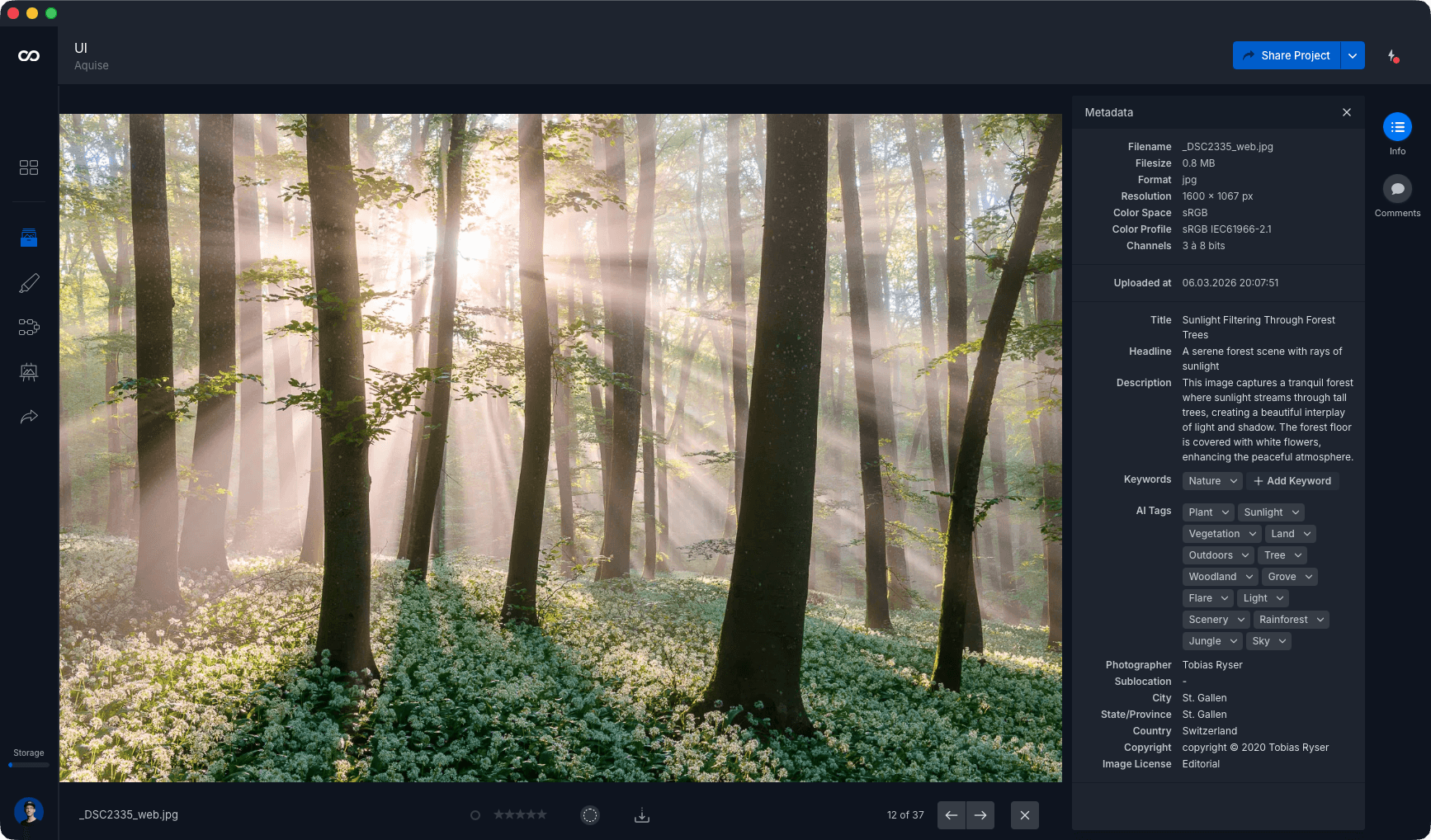
Q1 introduced moodcase Visual Asset Management, the new product line for searchable, structured visual asset access on Team plans.
Alongside moodcase Studio, built for project-based client work, Visual Asset Management is built for archives, metadata, and long-term retrieval. The quarter also added the first AI-assisted metadata tools, multilingual keyword generation, and integrated location mapping.
Less manual entry. More retrievable assets.
moodcase Visual Asset Management
A dedicated product line for teams working with structured visual archives. Available on Team plans (Team Start, Team Grow, Team Scale, Team Advanced).
moodcase Visual Asset Management covers searchable archives, structured metadata, long-term asset access, and defined team controls. It separates two workflows on one platform: project-based collaboration in moodcase Studio, asset-centric organisation in Visual Asset Management.
AI-assisted metadata descriptions
Available on Team plans. Image descriptions are now generated automatically into empty metadata fields, keeping asset information consistent across larger collections and reducing repetitive entry work.
Multilingual keyword generation
Available on Team plans. Keywords can be generated in multiple languages directly inside the metadata workflow. A starting point for searchable categorisation, adjustable before publishing.
Interactive location mapping
Assets with coordinate data now display an integrated map inside the metadata panel. The location pin opens the precise position for verification, useful when archive work requires confirming where an image was taken.
Team plan structure
Four Team plans were introduced for organisations working with growing visual archives: Team Start, Team Grow, Team Scale, Team Advanced. Each step increases asset volume, search depth, and user control.