Insights
— Platform
Approval is a decision, not an assumption.
A client goes quiet for three days and the project moves forward. Everyone reads the silence as a yes. But no one decided anything, and that is the problem. Approval is a decision: someone looks at the work, judges it ready, and says so. In most client workflows that moment is never recorded. It is inferred. The gap between a decision made and one only assumed is small on the day and expensive the day it is questioned.

Mathias Buschor
Co-Founder at moodcase
•
6
min read

Approval by silence is the workflow nobody chose
The most common approval method is the absence of objection. A studio delivers the gallery from a fashion editorial on a Friday, the full set of looks for the brand and its art director to choose from. The client says nothing through the weekend. By Monday the selects are retouched and laid into the layout, and the shoot is closed out. No one approved anything. The silence was treated as a yes because the workflow had no other way to move.
The silence holds until it does not. The client was traveling. They assumed their partner would reply. They meant to ask for one frame to be swapped and forgot. None of that was in the silence. It was read as agreement because the project needed to move and a guess was the only thing on hand.
And a guess is what it is. The person who needs the answer most, the studio, ends up supplying it themselves.
An explicit yes still disappears if it lives outside the work
The step up from silence is a real yes. A reply to an email. A line in a chat. A nod across a meeting table. That is a decision. It is also a decision filed somewhere that was never built to hold decisions.
Three weeks later the question arrives: was the cover look signed off, or only the inside spread? The answer is in an inbox, under a subject line no one remembers, in a thread that forked the moment a second approver was looped in. The decision was made. The record of it scattered the instant it was made.
Email also splits one decision across several people. One approver replies to the photographer. A second comments on a forwarded thread. A third says yes on a call. Three real decisions, none of them attached to the images they were about.
"Approved, looks great" decides everything and nothing
A client writes approved, looks great. Approved what? The forty frames in the gallery, or the twelve they left comments on? This crop, or last week's version they were also looking at? The full retouch, or the selection?
An approval with no scope approves everything and nothing at the same time. It is enough to move the project forward and not enough to say what was decided. The part that was missed stays invisible until production, where it becomes the expensive thing to fix.
The repair is not more words in the reply. It is a yes that points at something specific: a named version and the exact set of images it covers. An approval like that cannot be stretched later to mean more, or less, than it said.
An assumed approval does not skip the decision. It moves it to the wrong person
Here is the part that is easy to miss. When a studio treats silence as a yes, the decision did not vanish. It changed hands. Someone still decided the work was ready to print, and that someone was the studio, not the client. An assumed approval does not remove the decision. It quietly transfers it to the person with the least authority to make it and the most exposure if it is wrong.
This is why the cost lands where it does. On the routine project the transfer never shows. On the one that goes wrong, the client says a change was requested, the studio says the work was approved as delivered, and both are describing the same week from memory. The question stops being what was decided and becomes whose memory to trust.
A recorded approval is not only the studio's shield. In client work the approver is rarely the last word. The art director approves, then carries the set to the brand and the magazine's editor for their own sign-off. A one-line email gives them nothing to stand behind when the decision is questioned upstream. A clear record gives them something to carry.
A decision should leave a trace
Recording approval is not bureaucracy bolted onto creative work. The decision already happens. Someone already looks at the work and judges it ready. The only question is whether that moment leaves a trace or disappears the instant it is made.
That is the design choice. An approval is either an event the system captures or an inference someone reconstructs later. The two feel identical on the day. They behave nothing alike the day someone asks what was decided.
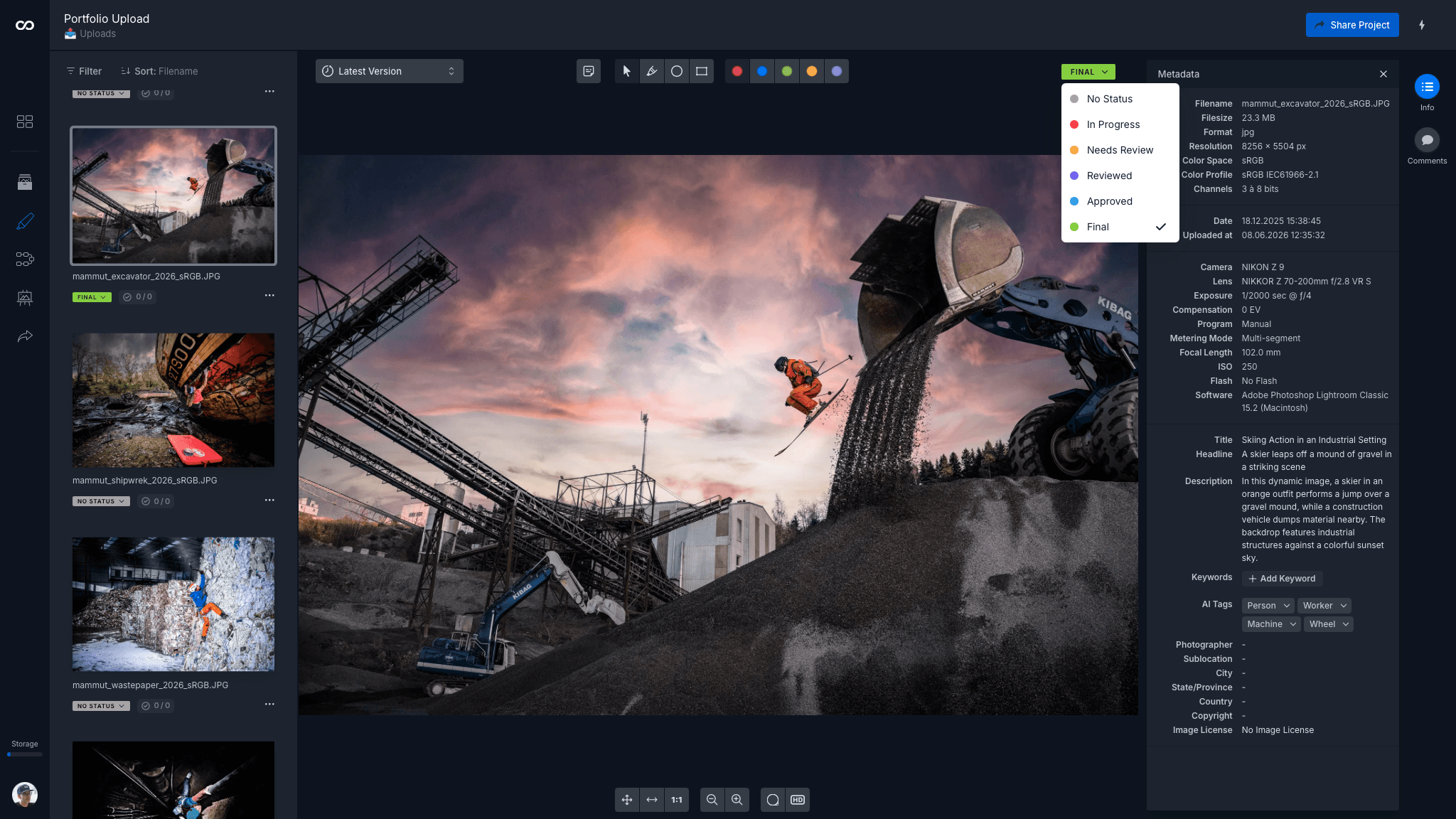
In moodcase Studio, selection and approval happen on the work itself. The client confirms their selection in the gallery, and the approval is recorded against the specific set of images, with the identity of the person who made it and the time they made it. What was approved is that exact set, not a general impression. The record does not drift after the fact, and it stays attached to the project instead of an inbox.
The effect is not faster decisions. It is decisions that stop being ambiguous, a yes that still answers, months later, the three questions an assumed approval only postpones: who decided, what they decided, and when.
Who this matters to
This matters the moment more than one person is involved in the decision and getting it wrong carries a cost: a reprint, a missed change, a client who remembers the project differently than you do. It matters most in client work, where the approval is not just a go-ahead but the record of what was agreed.
It matters less for solo work with no client and no handoff, where the only person who needs to know what was approved is the person who approved it. The question is not whether every yes needs a paper trail. It is whether the decisions that carry consequences get recorded when they are made, or reconstructed when they are disputed.
Visual assets need more than a folder. See how moodcase handles the full workflow.
Try all features for 7 days. No credit card required.
Approval
Review
Approval Unclear
Studios
RELATED
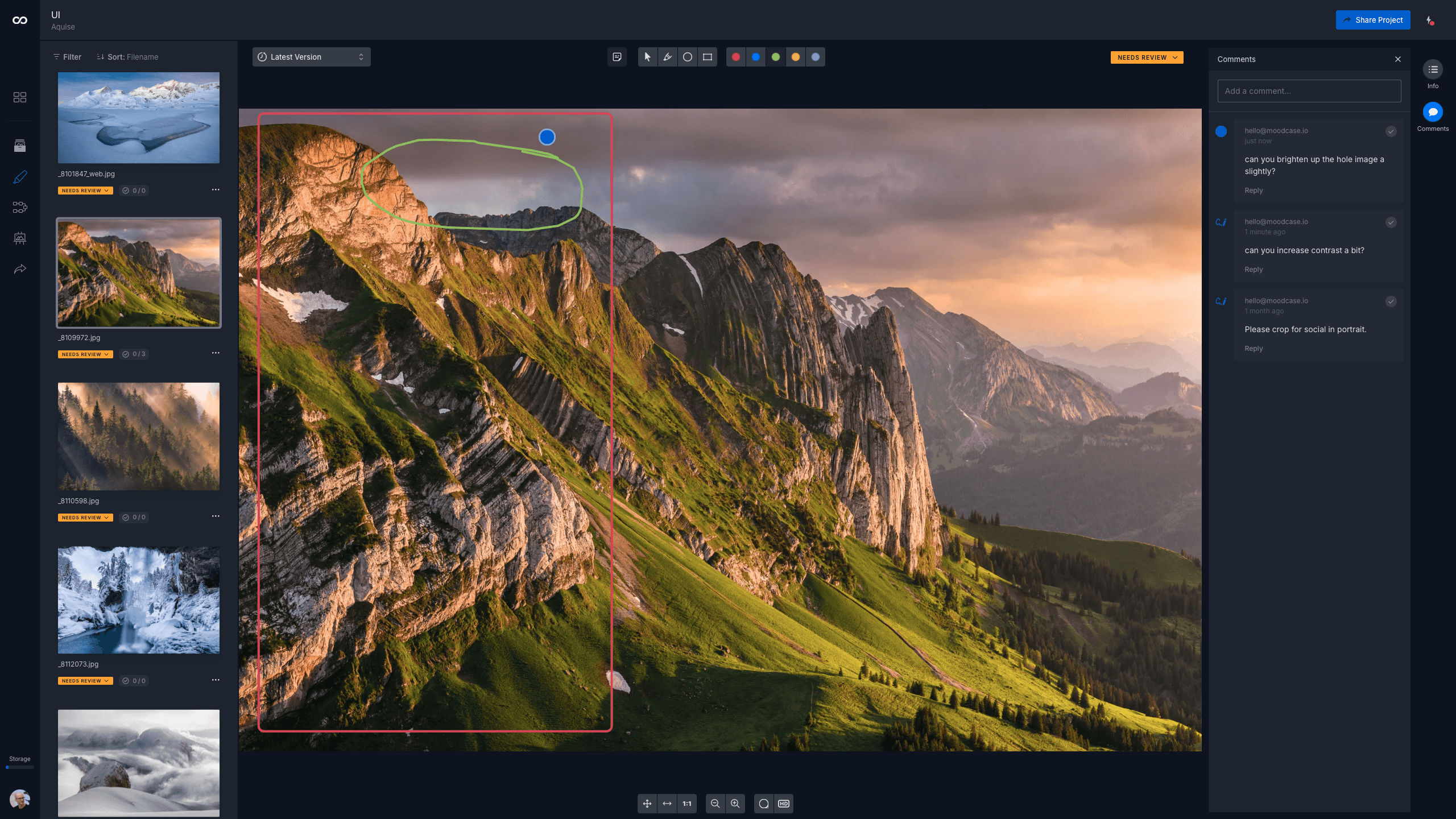
Why annotations live on the image, not beside it.
Approval is a decision someone makes, not a silence you interpret. The gap between the two surfaces months later.

When proofing is only part of the workflow.
Proofing tools handle selection. moodcase keeps the full project connected: review, approval, delivery, and structure beyond the handoff.