Insights
— Platform
Pixieset and moodcase. Where they diverge.
Pixieset bundles galleries, a website builder, CRM, print store, and mobile app. moodcase handles what happens to the images: review, feedback, approval, delivery, and the structure that holds beyond any single project. The comparison is in the working model.

Mathias Buschor
Co-Founder at moodcase
•
6
min read

What Pixieset is built around
Pixieset is built around the photographer's business operations. The platform's core unit is a Collection. Within a collection, the photographer creates Sets (albums). Clients access a gallery link, browse images, and can favorite selections into lists. The photographer receives the favorites as a CSV export or filename list, edits the selection, and re-uploads finals to replace the proofs.
Around this gallery core, Pixieset layers business tools. Studio Manager handles client contacts, contracts, invoices, and scheduling. The Store connects to galleries for print and digital sales with automated lab fulfillment. The Website builder creates a portfolio site. These products share one account and one interface.
For photographers who need a single platform for client management and gallery delivery, this breadth is the value. One login. One system. The gallery, the invoice, the contract, and the website all connected.
What moodcase is built around
moodcase is built around the visual asset and its lifecycle within a project. The core unit is the project, not the gallery. Assets live inside projects. Collections organize them. Galleries in moodcase are a presentation layer, not a container. They draw from collections through filters and display rules. One project can produce multiple galleries showing different selections, each with its own access, branding, and download permissions. The source stays in one place.
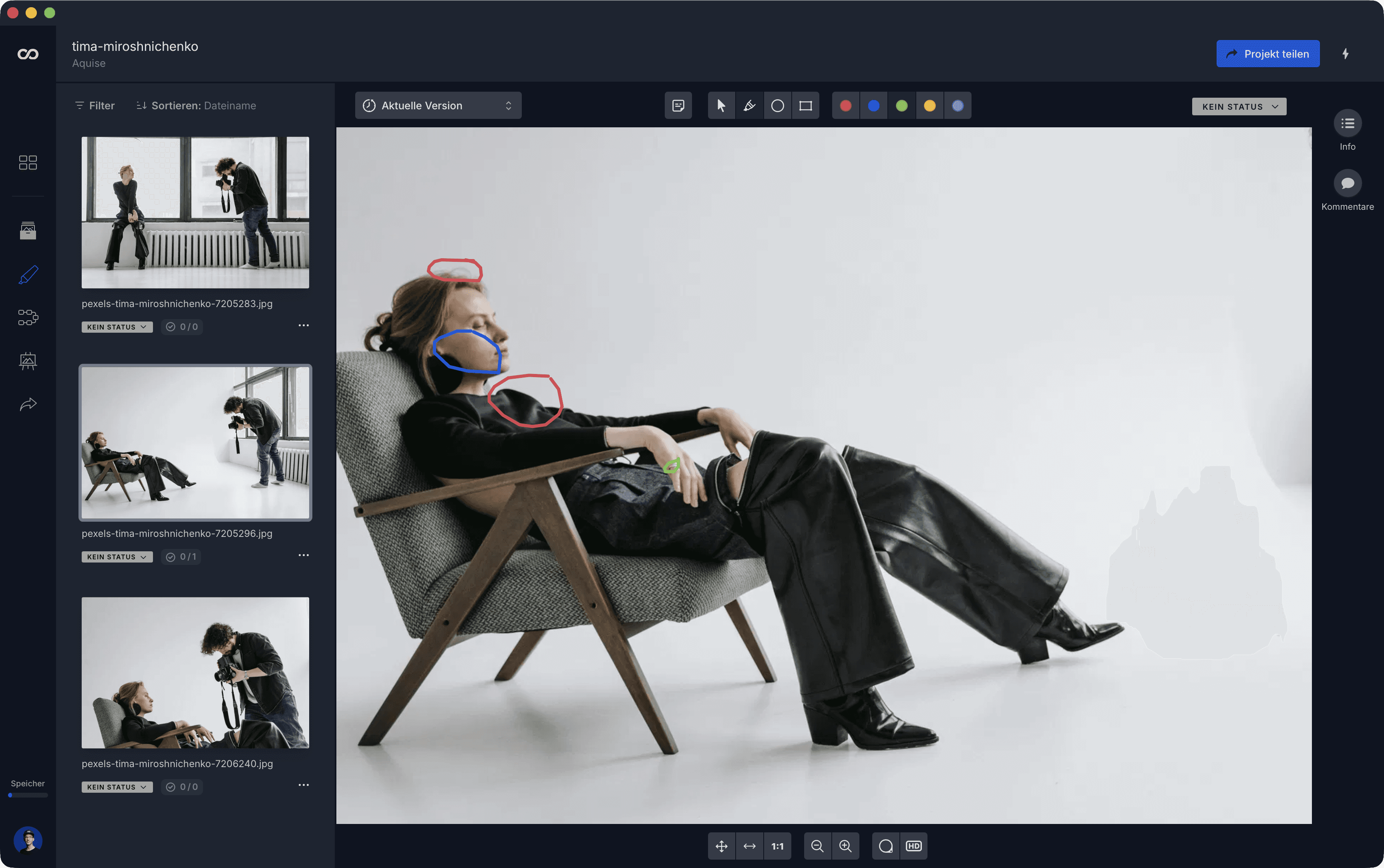
Feedback in moodcase is attached to the image as annotations and comments that persist across versions. Approval is recorded as an explicit workflow state. The project tracks what was selected, what is in progress, and what is final. Delivery happens inside the project through branded galleries, Quick Share ZIP, or controlled downloads.
Where the working models diverge
How feedback works. In Pixieset, clients favorite images and leave notes. The photographer receives a list. For selection workflows, this is direct and clear. In moodcase, feedback includes annotations drawn on the image, threaded comments, and revision instructions that stay attached across re-uploads.
How approval is recorded. Pixieset does not have an explicit approval state. The proofing cycle ends when the photographer interprets the favorites and delivers the finals. In moodcase, approval is a recorded workflow state. Selected, in progress, final. The record shows who approved, what was approved, and when.
How assets are organized. Pixieset organizes work into Collections and Sets. Each collection is a self-contained unit. In moodcase, assets carry metadata: keywords, AI tags, color labels, workflow status, ratings, copyright, location, and more. On team plans, global search finds any asset across the workspace by any of these attributes.
How delivery connects to the project. Pixieset's delivery is the gallery itself. The client accesses the collection, downloads, or orders prints. In moodcase, delivery is one stage of the project. The same project that held the review, the feedback, and the approval also holds the delivery.
What happens after the project ends. In Pixieset, collections can be set to expire. In moodcase, assets persist in the workspace with their metadata and structure. A project completed six months ago is still searchable, filterable, and accessible.
Who fits where
Pixieset works well for photographers who want one platform for the business side of photography. Booking, contracts, invoicing, gallery delivery, print sales, and a website. For wedding and portrait photographers who need a polished gallery-to-print pipeline, that arrangement covers the full business cycle.
Structured handling matters more when the workflow centers on what happens to the images between export and delivery. Multi-round review with annotations. Recorded approval. Structured delivery. Assets that remain organized and searchable beyond the project.
The two platforms do not compete on the same axis. One organizes the photographer's business. The other organizes the photographer's visual assets.
Visual assets need more than a folder. See how moodcase handles the full workflow.
Try all features for 7 days. No credit card required.
Review
Approval
Delivery
Photographers
RELATED

Picdrop and moodcase. The distinction.
Pixieset organizes the photographer's business. moodcase organizes the visual assets. Where the working models diverge.

NAS and cloud-based visual asset handling.
NAS handles backup and local storage. moodcase handles review, feedback, approval, and delivery. Many photographers use both.