Insights
— Platform
When the current setup stops being enough.
Photographer Julian Konrad managed projects across four separate tools at approximately €65 per month. The real cost was the time lost switching between systems and reconstructing context. The shift to a connected system is not about better tools. It is about recognizing the arrangement itself has become the friction.

Mathias Buschor
Co-Founder at moodcase
•
5
min read
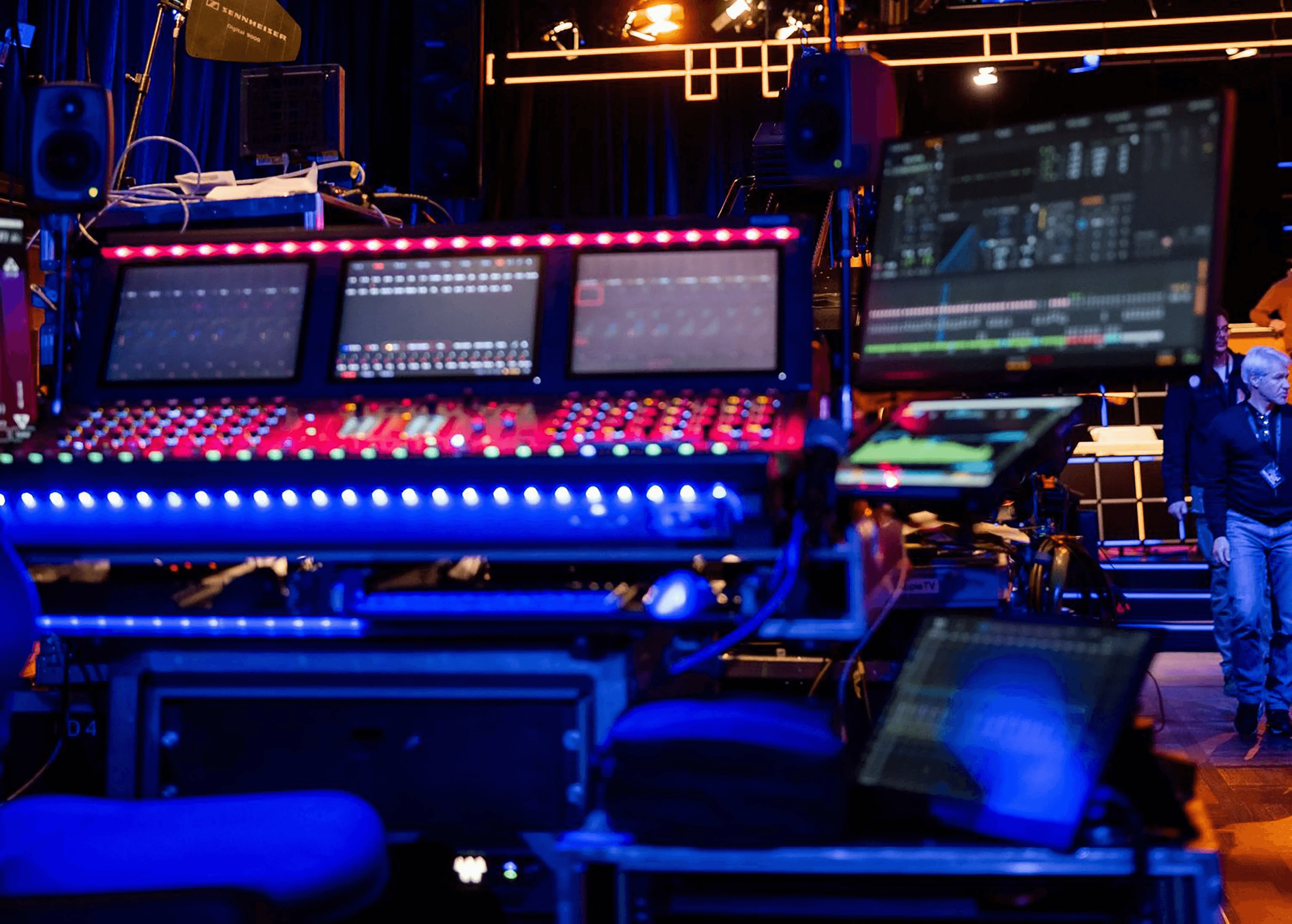
Five patterns that signal the current setup is no longer enough
These are not theoretical scenarios. They are the patterns we hear from photographers and studios who eventually restructure their workflow.
Feedback is scattered across channels. The client sends retouching notes by email. The art director marks favorites in the gallery tool. The retoucher asks a question on a messaging app. The photographer coordinates across three channels for one project. On a project with 1,000 images and three stakeholders, the coordination cost exceeds the editing cost. Professional photographers report spending 5 to 10 hours per client managing disorganized feedback loops.
Approval is ambiguous. The client downloaded the images. Does that mean they are approved? The photographer assumes yes. Two weeks later, the client asks for changes to images that were already sent to print. There is no record of explicit confirmation. Approval was inferred from behavior, not recorded as a decision.
Delivery is disconnected from the project. The review happened in one tool. The delivery happens in another. The client receives a transfer link with no connection to the feedback, the selections, or the approval that preceded it. The handoff breaks the project context.
Finding past work requires memory, not search. A client requests an image from a project completed eight months ago. The photographer navigates a folder tree, opens several directories, and scrolls through hundreds of thumbnails. There is no search by keyword, no filter by workflow status, no metadata to guide retrieval.
Every new project means reassembling the workflow. The photographer sets up a gallery in one tool, a delivery link in another, coordinates feedback through email, and tracks status manually. Each project starts from scratch. The system does not accumulate knowledge or structure.
What changes when the workflow is connected
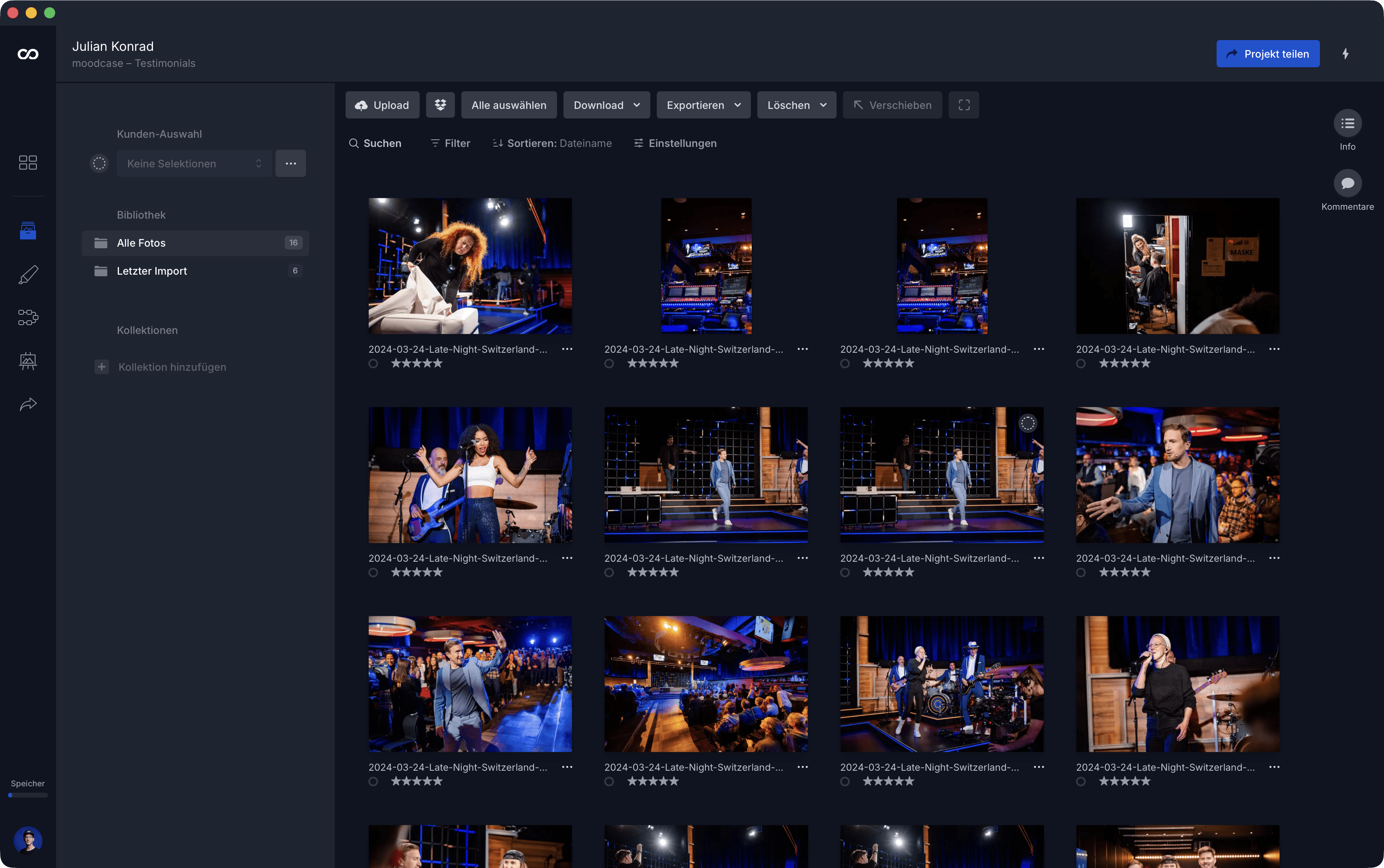
In moodcase, the project is the unit. Everything that happens to the visual assets, from export to delivery, stays inside one system.
Feedback lives on the image. Annotations, comments, and revision instructions stay attached to the asset across versions. The photographer does not reconstruct context from email threads. The context is visible on the work.
Approval is a recorded state. Selected, in progress, final. The record is explicit. It does not depend on interpretation.
Delivery is part of the project. Branded galleries, password protection, controlled downloads, custom domains on higher plans. The client receives the work in a presentation that matches the quality of the photography.
Structure accumulates. Metadata, keywords, AI tags, workflow states. Every project adds to a workspace that becomes more searchable and structured over time, not more cluttered.
When to stay, when to move
Separate tools are a valid starting point. For the photographer working solo on small projects with one client interaction per project, the current arrangement may be sufficient.
The transition matters when the overhead becomes visible. When managing the tools takes more time than doing the work. When context gets lost between steps. When a client expects a record of what was decided and the photographer reconstructs it from messages.
The question is not whether the individual tools are bad. The question is whether the arrangement still fits the work.
Visual assets need more than a folder. See how moodcase handles the full workflow.
Try all features for 7 days. No credit card required.
Fragmentation
Feedback Loops
Photographers
Studios
RELATED
Visual assets for small creative teams.
Five patterns that signal a photographer's workflow has outgrown its tools. Not the tools. The arrangement.
When proofing is only part of the workflow.
Proofing tools handle selection. moodcase keeps the full project connected: review, approval, delivery, and structure beyond the handoff.