Insights
— Platform
WeTransfer discontinued review and approval. Now what.
In December 2025, WeTransfer removed Portals and Reviews. For teams that used those features for feedback, selections, and approval, the question is not which transfer tool comes next. It is what review and approval workflows actually need.

Mathias Buschor
Co-Founder at moodcase
•
7
min read
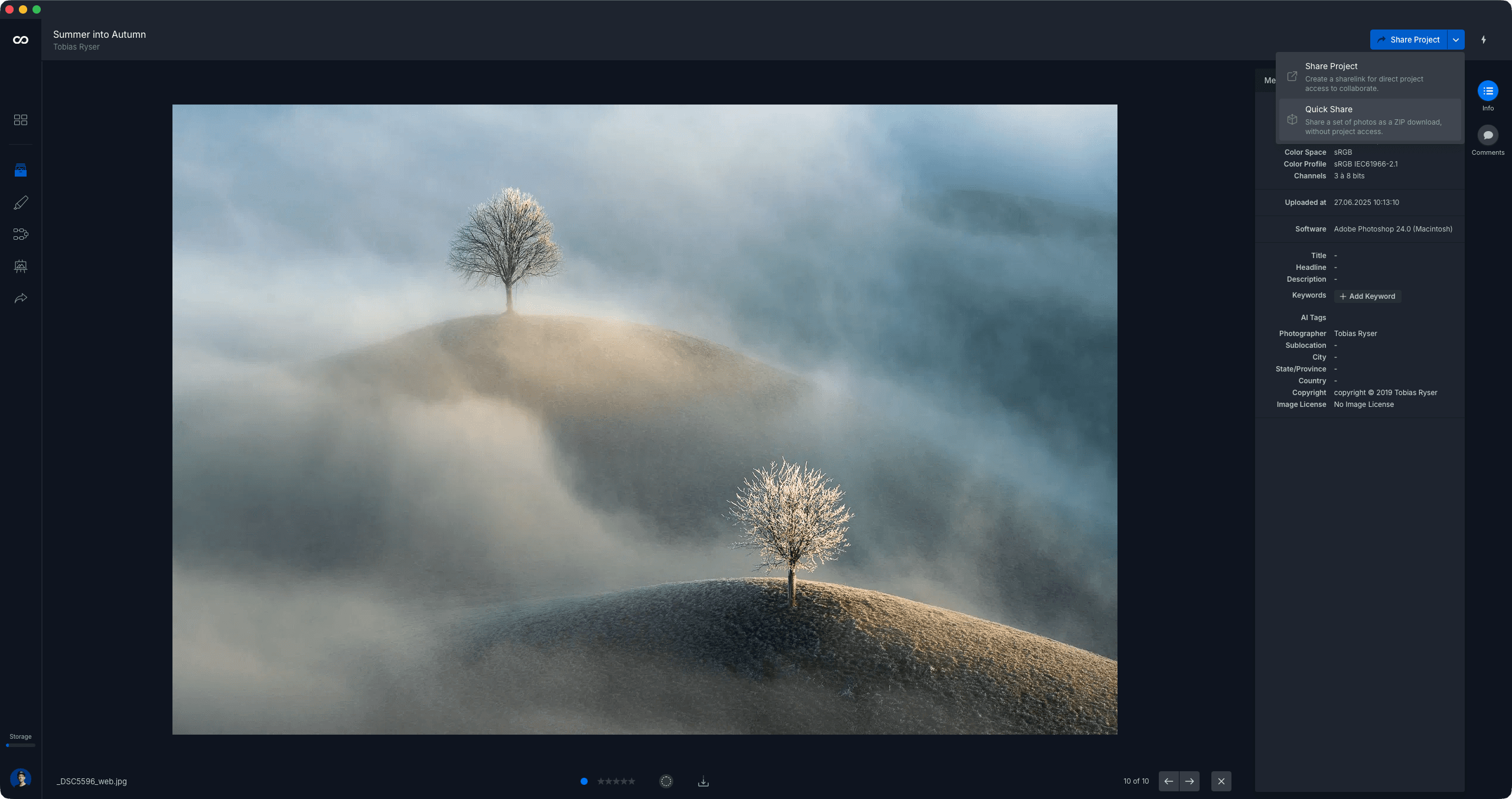
Photo:
Josephine Vyeda
What happened
WeTransfer announced in October 2025 that it would discontinue Portals and Reviews. The shutdown happened in three stages. From October 22, no new Portals or Reviews could be created. From November 22, no new uploads, comments, or approvals were possible. On December 22, all existing content, comments, and shared links were permanently removed.
WeTransfer's explanation was direct: only a small fraction of users relied on these features. The platform would remain focused on file transfer. The decision followed the acquisition of WeTransfer by Bending Spoons in July 2024.
For teams that only used WeTransfer to send files, nothing changed. For teams that had built review rounds, client feedback, and approval processes around Portals and Reviews, the workflows stopped working.
What actually disappeared
Portals and Reviews were not transfer features. They were the closest thing WeTransfer had to structured collaboration. Reviews allowed clients to view assets in the browser, leave comments, mark favorites, and signal approval. Portals organized multiple reviews into a shared space with persistent access.
When those features were removed, what disappeared was not a way to send files. It was the place where feedback lived on the asset. Where selections were recorded. Where approval happened. Where project context accumulated over time.
Teams that relied on these features lost more than a tool. They lost the structure that held their review and delivery process together.
Why transfer tools added review in the first place
WeTransfer was not the only transfer service that moved into review and approval. The pattern is common. Teams need a place for feedback. The transfer tool is already in the workflow. So review features get added on top of a system built for something else.
The underlying model stays the same: temporary links, expiring access, content that is not meant to persist. Review and approval are layered onto a structure that was designed to move files from one place to another and then let go.
This works for a while. A client can view images, leave a comment, mark a favorite. But the structure underneath has no concept of a project that develops over time. No versioning that connects a revised file to the feedback that prompted the revision. No approval state that records who decided what and when. No persistent access that lets someone return to the project three months later.
When WeTransfer removed Portals and Reviews, it made this structural gap visible. The features were gone, but the gap had always been there.
What review and approval workflows actually need
The teams affected by this change are not looking for another way to send large files. They are looking for a place where review, feedback, and approval can live as part of the project.
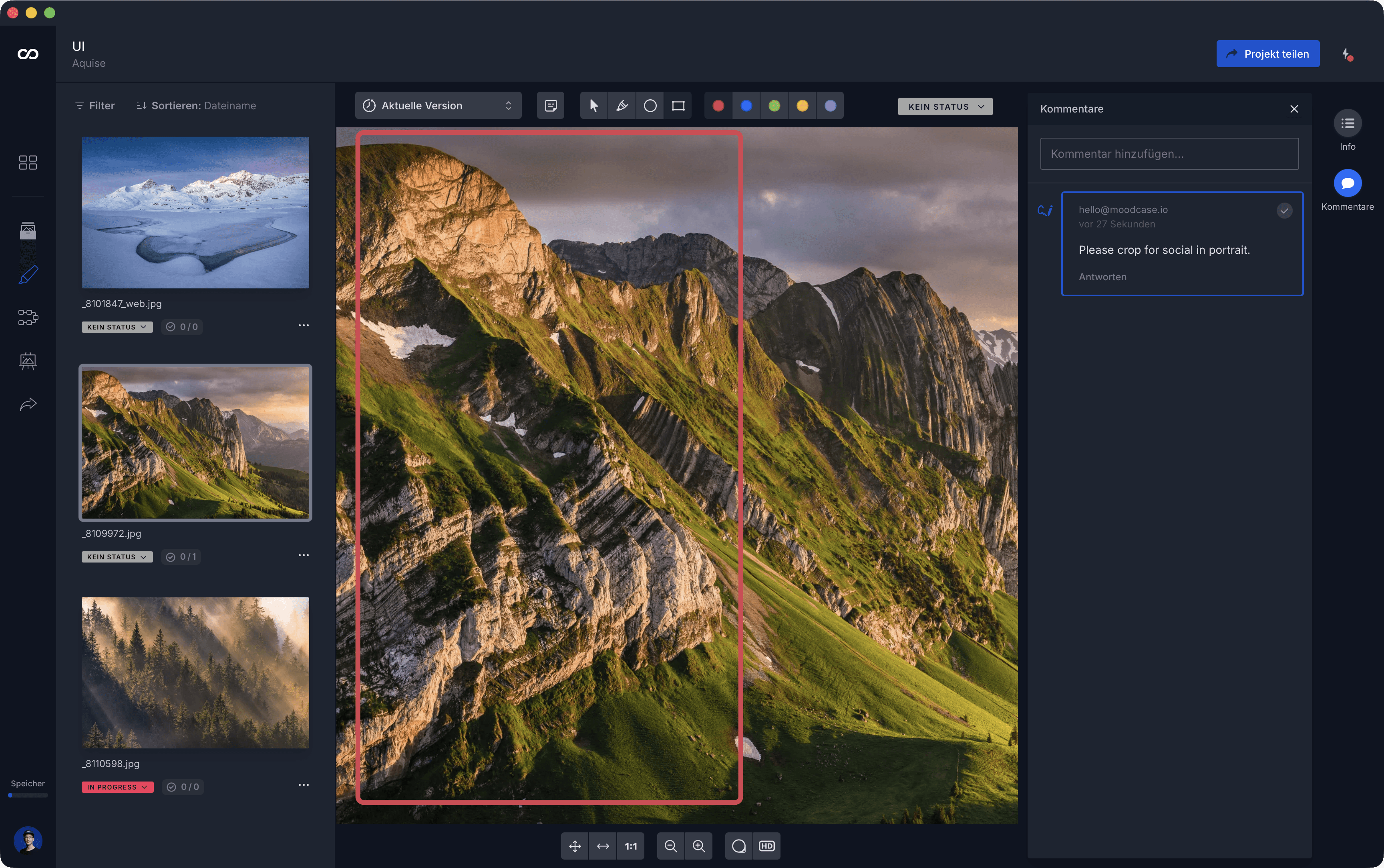
Feedback attached to the asset. A comment or annotation that stays with the image across versions. Not a note in an email thread. Not a message in a chat channel. Feedback that is visible to everyone working on the project, in the context where it belongs.
Approval as a recorded state. Not a verbal confirmation. Not a thumbs-up in a message. An explicit workflow state that shows what was approved, by whom, and when. A decision that is part of the project record.
Persistent access. A project that remains accessible after the first review round. Where a client can return to see the current state. Where the team can trace back through decisions. Where history does not expire with a link.
Delivery inside the project. Final delivery as part of the same structure that held the review and the approval. Branded galleries, controlled downloads, presentation that reflects the standard of the work. Not a separate step in a separate tool.
Structure that holds over time. Projects with 500 or 2,000 images across multiple review rounds, multiple deliverables, multiple stakeholders. The structure needs to carry that weight without breaking down between steps.
What changes with a project-based model
moodcase is built around the project, not the transfer. Assets live inside projects. Collections organize them. Galleries present them. Feedback, approval, and delivery happen inside the same structure.
Comments and annotations stay attached to the image across versions. Approval is recorded as an explicit workflow state: selected, in progress, final. Delivery happens through branded galleries, Quick Share ZIP, or controlled downloads. The project does not leave the system between steps.
For teams that used WeTransfer Portals and Reviews, moodcase is not a replacement for the transfer. It is a different working model. One where review, feedback, approval, and delivery are not features added on top of file sharing. They are the structure the system is built around.
The question behind the question
When a platform removes review and approval, the first instinct is to find a replacement. The more useful question is whether the replacement should be another transfer tool with review features attached, or a system where review and approval are part of how the project works.
The answer depends on the workflow. If the need is to send files and collect a quick yes, a transfer tool is enough. If the need is to keep feedback, decisions, and delivery connected to the asset over time, the working model needs to be different from the start.
Visual assets need more than a folder. See how moodcase handles the full workflow.
Try all features for 7 days. No credit card required.
Review
Approval
Feedback Loops
Delivery
Photographers
RELATED

When file sharing stops working for visuals.
WeTransfer removed review and approval. The replacement is not another transfer tool.

When proofing is only part of the workflow.
Proofing tools handle selection. moodcase keeps the full project connected: review, approval, delivery, and structure beyond the handoff.